The Exact Reason Tulsa Map Views Flatlined After the Newest Search Update
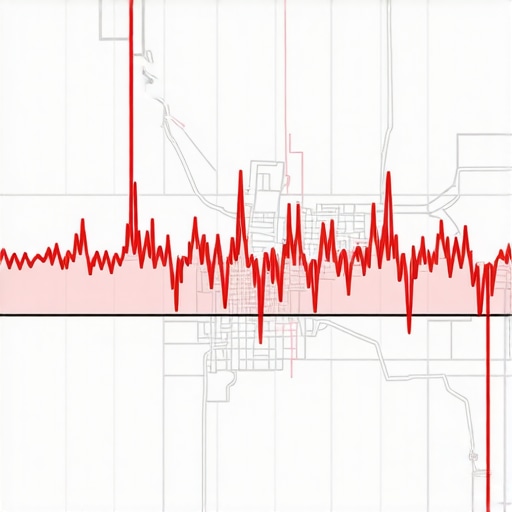
It happened almost overnight. In early March 2026, business owners across Green Country opened their Google Business Profile dashboards only to find a sight that sent chills down their spines: a flatline. For years, Tulsa businesses – from the bustling HVAC companies in Broken Arrow to the boutique law firms in the Blue Dome District – relied on a steady stream of “Map Views” and “Direction Requests” to fuel their growth. Then, the March 2026 Core Update arrived, and the faucet was abruptly turned off.
If your impressions have plummeted and your phone has stopped ringing, you aren’t alone. This wasn’t a glitch; it was a fundamental shift in how Google perceives local relevance. As a creative strategist and SEO specialist, I’ve spent the last decade helping brands navigate the shifting sands of search. But the 2026 update is different. It marks the end of the “traditional” Local SEO era and the beginning of the “AI-Driven Entity” era. To survive, you must understand exactly why the algorithm decided your business was no longer worth showing to your Tulsa neighbors.
Before we dive into the technical “why,” it is crucial to realize that your visibility hasn’t just moved; it has been filtered. You can unlock Tulsa’s Local SEO secrets: boost your business visibility by understanding the mechanics of this “blackout.”
The Death of Keyword Stuffing: Why AI Changed the Game
For a long time, the recipe for ranking in the Tulsa Map Pack was simple: include your city and your service in your business name, build a few hundred citations, and wait. If you were “Tulsa Plumber Pros,” you likely ranked for “Plumber Tulsa.” However, the March 2026 update, building on the foundations laid in late 2025, has effectively killed the power of keyword stuffing. Google’s AI now uses advanced machine learning to interpret search intent, moving away from “Lexical Search” (matching words) to “Semantic Search” (understanding meaning).
Google’s AI-driven relevance models now prioritize “Entity Authority” over keyword density. This means that having your primary keyword in your title is no longer enough if your business “Entity” isn’t trusted by the algorithm. When a user in Midtown Tulsa searches for a service, Google isn’t just looking for a business with those words; it’s looking for a business that the AI can verify as a legitimate, high-authority local staple. If your google business profile seo strategy is still stuck in 2022, the AI will see your profile as “thin content” and suppress it in favor of more established entities.
The October 2025 update introduced a “relevance weighting” that penalized profiles with mismatched data across the web. By the time the March 2026 Core Update rolled around, this weighting became the primary filter. If your business name on your website says one thing, but your Google Business Profile (GBP) says another to capture more keywords, the AI perceives this as a “deceptive signal.” In the eyes of the AI, a deceptive signal is a high-risk signal, leading to the flatline you see today.
The March 2026 Core Update: A Local Deep Dive
The technical shift in the March 2026 update can be summarized in two words: Verified Authority. Google has introduced what many in the industry are calling the “Verified Only” map pack. This isn’t just about the blue checkmark; it’s about a threshold of algorithmic trust. If your profile doesn’t meet a specific “Trust Score,” you are filtered out of the top 3 and relegated to the “More Businesses” graveyard, where click-through rates drop by 90%.
One of the most significant changes is the crackdown on “Location Drift.” In the past, a business located in South Tulsa could often rank for searches in Owasso or Sand Springs if they had enough backlinks. The March 2026 update has tightened the proximity radius significantly. Google’s AI now tracks user behavioral signals – like how many people actually drive to your location from specific zip codes – to determine your “True Service Radius.” If the AI detects that you are trying to rank in areas where you have no physical presence or legitimate customer engagement, it triggers a filter that suppresses your visibility across the board. You can learn more about how to navigate this in our guide on 3 Tulsa Maps SEO tweaks to beat the 2026 local filter update.
Furthermore, the rise of AI Overviews (formerly SGE) has changed the real estate of the search results page. Google now provides a summarized answer at the top of the screen, often pulling data from only the most “Trusted Entities.” If your business isn’t part of that trusted knowledge graph, you are effectively invisible to the modern searcher who never scrolls past the AI’s first recommendation.
Why Tulsa Contractors and Service Businesses Got Hit Hardest
If you are a Tulsa roofer, plumber, or HVAC technician, you likely saw the most dramatic drop in views. This is because Service Area Businesses (SABs) – businesses that go to the customer rather than having a storefront – are under intense scrutiny by the new AI algorithm. Because SABs often hide their addresses, Google’s AI has a harder time verifying their physical “Entity.” To combat the thousands of “ghost offices” created by lead-gen companies, the March 2026 update has raised the bar for SAB verification.
To rank google business profile listings for service businesses now requires more than just a verified address; it requires geographic proof of work. Google is now looking for “Geo-Tagged Signals” – photos of work being done in specific Tulsa neighborhoods, reviews that mention specific streets or landmarks (like “fixed a leak near the Gathering Place”), and local landing pages that are hyper-specific to Tulsa’s geography. Many contractors saw their views flatline because their service area was set too wide, covering all of Northeast Oklahoma without having the local “signals” to back it up. We’ve analyzed why Tulsa contractors get more calls by fixing these 3 service area page errors, and the common thread is always a lack of localized proof.
The AI now treats an SAB with a 50-mile radius but no localized engagement as a “low-trust entity.” If your profile says you serve Jenks, but no one from Jenks ever interacts with your profile, the AI assumes you are “drifting” and cuts your visibility to protect the user experience.
The “Engagement Gap”: The Real Reason Views Flatlined
Perhaps the most overlooked aspect of the 2026 update is the “Engagement Gap.” In the current search landscape, impressions are no longer a guaranteed byproduct of ranking. Instead, impressions are now *earned* through engagement. Google’s AI tracks the Click-Through Rate (CTR) of every listing in the Map Pack. If your listing is shown to 100 people and only one person clicks, the AI concludes that your listing is irrelevant to that specific search query.
This creates a “death spiral.” As your engagement drops, Google shows you less. As you are shown less, your views flatline. This is why a professional google maps ranking service is now focused more on “conversion-centric SEO” than just “ranking SEO.” You need to give users a reason to click immediately. This includes having a high-resolution cover photo of your Tulsa storefront or team, a “Booking” button that actually works, and a Q&A section that addresses local concerns.
Behavioral signals are the new backlinks. Google is watching:
- Request Directions: Does the user actually use Google Maps to find you?
- Click-to-Call: Is your business solving the user’s problem immediately?
- Dwell Time: Do users spend time reading your updates and looking at your photos?
If your profile is a static “set it and forget it” page, the AI will eventually stop feeding it impressions because it isn’t generating the engagement data Google needs to justify your position.
4 Steps to Reclaim Your Tulsa Map Ranking
The flatline doesn’t have to be permanent. Reclaiming your spot in the Tulsa Map Pack requires a shift from “Legacy SEO” to “Entity-Based SEO.” Here is the four-step framework we use to revive suppressed profiles.
1. Audit for Citation Gaps
The AI is looking for consistency. If your business is listed as “Tulsa HVAC Pros” on Google but “Tulsa Heating & Air” on Yelp, your Entity Authority is fractured. You must ensure your Name, Address, and Phone number (NAP) are identical across every corner of the web. Use a professional google business profile audit tool to identify these discrepancies. Even a minor difference, like “Street” vs. “St,” can sometimes confuse the AI’s entity matching in a high-competition market like Tulsa.
2. Fix Local Schema Markup
Your website needs to speak the AI’s language. By implementing Local Business Schema, you are providing the algorithm with a structured data map of your business. This includes your coordinates, your service area, and your specific relationship to Tulsa. We have documented the specific schema markup tweaks that help Tulsa contractors stand out, which includes using “SameAs” properties to link your GBP to other authoritative local profiles.
3. Review Velocity and Sentiment
It is no longer enough to have “more reviews” than your competitor. The AI now analyzes “Review Velocity” (how often you get reviews) and “Sentiment Analysis” (what people are actually saying). A sudden influx of 50 reviews followed by months of silence looks like manipulation to the AI. You need a steady, consistent stream of reviews. Encourage your Tulsa customers to mention specific services and locations in their reviews. A review that says, “Great roofer in Midtown Tulsa near Utica Square,” is worth ten reviews that just say, “Good job.”
4. Strategic Map Embeds
One of the most effective ways to combat “Location Drift” is to anchor your digital presence to your physical location through map embeds. By embedding your specific Google Maps CID link into your location pages and blog posts, you create a direct signal back to Google’s database. We’ve seen how a simple maps embed strategy doubled our Tulsa store visits by reinforcing the “Physical Entity” of the business in the eyes of the AI.
Conclusion: The Future of Tulsa Search
The March 2026 Core Update wasn’t designed to hurt Tulsa small businesses; it was designed to reward the most relevant and trusted ones. The “flatline” you are seeing is the algorithm’s way of telling you that your current strategy is no longer providing the signals it needs to verify your authority. The era of “gaming” the system with keywords and fake citations is over.
To win in 2026 and beyond, you must embrace a sophisticated google business profile optimization strategy that focuses on entity trust, user engagement, and geographic proof. Whether you are a lawyer in the Mayo Building or a landscaper in Jenks, your digital presence must reflect your real-world authority. Don’t let your business stay in the dark. The map pack is still the most valuable real estate in the world for a local business – you just have to play by the new rules to claim it.
If you’re ready to stop the flatline and start growing again, Contact Us at Tulsa Local SEO for a comprehensive audit of your profile. Alternatively, if you’re a “do-it-yourself” marketer looking for the best automation and data, visit SEO Viper Tools to get the insights you need to dominate the Tulsa market.