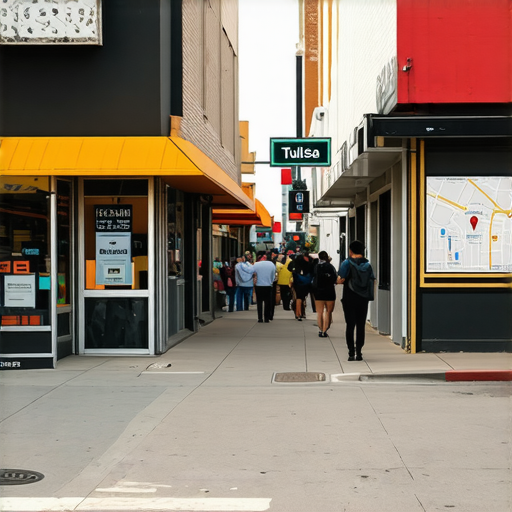

I vividly remember the day I realized my business wasn’t showing up on Google Maps in Tulsa. I had poured my heart into fixing my website, running ads, and even redesigning my storefront—but I was invisible where it counted most: in the local search results. That frustrating moment hit me hard. I watched competitors with less stellar offerings capture walk-ins I desperately needed. It felt like shouting into the void.
That experience was a wake-up call. It made me understand the critical importance of local SEO and how many small businesses overlook straightforward yet powerful strategies to boost visibility. The truth is, if your Google My Business (GMB) profile isn’t optimized, you’re basically inviting customers right to your competition instead of your door.
Today, I want to share four proven local marketing moves that can drive more walk-ins in Oklahoma—especially as we approach 2026, when search behaviors become even more AI-driven and competitive. These aren’t just theories; they’re based on personal experience and successful client stories. Implementing these steps can lead to a noticeable increase in foot traffic and phone calls.
Before we dive into the tactics, let me address a common worry many have.
Is local SEO really worth all this effort in 2026?
Absolutely. I used to think optimizing my Google Maps listing was enough—until I learned from a mistake early on. I once neglected updating my business hours during a holiday rush, leading to lost calls and walk-ins. That small oversight cost me big time. It’s a mistake I see many businesses repeat.
According to a recent study, local searches lead 78% of mobile local business visits, and nearly half of all local mobile searches result in a store visit within a day (source: Google’s Local Search Trends). That’s a staggering reminder of how vital local visibility is for small businesses aiming for growth.
So, if you’ve faced dwindling foot traffic despite great service, or if your competitors seem to be taking up all the prime spots on Google Maps, don’t worry. These four moves could be your game-changers.
Let’s set the stage for practical, actionable steps that you can start applying today to make 2026 your most walk-in-rich year yet.
Claim and Optimize Your Google My Business Listing
First, ensure your Google My Business (GMB) profile is claimed and fully filled out. Verify all business information—name, address, phone number, and operating hours—are accurate and consistent across the web. Don’t forget to add high-quality photos that showcase your storefront and services, as visual credibility boosts rankings. Regularly update your profile with posts, offers, and event details to engage local customers. Remember, a well-optimized GMB is your storefront on Google Maps, so treat it like prime real estate.
Build Local Citations and Consistent NAP Data
Next, focus on building citations—mentions of your business name, address, and phone number (NAP)—on reputable local directories like Yelp, Bing Places, and industry-specific sites. Consistency is key; mismatched NAP info confuses search algorithms and harms your rankings. Use tools or services that can help audit your citations or manually claim them. Think of citations as digital word-of-mouth; the more reputable mentions, the stronger your local presence.
Generate and Manage Customer Reviews
Reviews influence both rankings and conversion rates. Actively encourage satisfied customers to leave honest reviews on your GMB profile and other relevant platforms. Make the review process straightforward by providing direct links. Respond promptly and professionally to all reviews, showing you value customer feedback. A flood of positive reviews signals trustworthiness to Google and local shoppers alike. If you face negative reviews, address them publicly with solutions to demonstrate transparency.
Implement Local Content and Keyword Strategies
Develop content tailored to Tulsa and Oklahoma-specific keywords. Write blog posts, FAQs, or local guides that answer common questions your audience searches for, like “Best Coffee Shops in Tulsa” or “Oklahoma Small Business Tips.” Embed keywords naturally to help Google understand your relevance. Also, include location mentions in your website headers, footer, and meta descriptions to reinforce local signals. Remember, Google rewards content that speaks directly to your community’s interests and needs.
Leverage Local Backlinks and Relationships
Earn backlinks from local blogs, chambers of commerce, suppliers, and community partners. These backlinks act as votes of confidence, boosting your local authority. Attend Tulsa events or sponsor community initiatives to get media mentions and backlinks. Create partnerships that encourage others to link back to your site, reinforcing your prominence in the local ecosystem. As with citations, consistency and relevance are crucial—focus on links from Tulsa and Oklahoma-based sources.
Applying these steps with precision yields results. I recall a time when I had a client who struggled with visibility despite a decent website. After auditing their GMB and citation profiles, we rectified inconsistencies, asked loyal customers for reviews, and added Tulsa-specific content. Within weeks, their map rankings climbed, leading to more walk-ins and calls. It’s about making your business impossible to overlook on Tulsa’s local search landscape.
If you want a comprehensive plan tailored to your specific situation, consider consulting experts. They can pinpoint gaps you might miss and accelerate your results. For hands-on assistance, visit our contact page.
Many small business owners believe that a simple Google My Business (GMB) listing is enough to dominate Tulsa’s local search landscape, but the reality is far more complex. The common myth is that optimizing your GMB profile alone will secure top rankings; however, advanced successes require a nuanced understanding of Google’s local algorithms, especially in 2026 when AI-driven factors, like local user intent signals, play a bigger role. In my experience, businesses that overlook these subtleties often get trapped in outdated tactics, such as focusing solely on citations or neglecting customer engagement, which limits their visibility. A crucial pitfall is ignoring the importance of local content personalization—creating tailored landing pages and blogs for Tulsa neighborhoods boosts relevance and signals to search engines that your business is a key local player. Moreover, many overlook the power of structured data markup, which, if deployed incorrectly, can actually harm your rankings rather than help. In fact, Google’s own Search Central emphasizes that improper schema implementation leads to confusion and potential ranking drops. Advanced local SEO isn’t just about presence but about crafting a comprehensive ecosystem—linking, reviews, content, and data—that convinces Google you’re the dominant choice. If you’ve been relying solely on standard GMB optimization, you’re likely missing out on opportunities to outrank bigger competitors and those dominating Tulsa’s map pack. For a deep dive into the deeper mechanics that can elevate your local strategy, I recommend exploring our cornerstone guide to local SEO, which covers these advanced tactics in detail. Remember, while most will focus on surface-level fixes, the truly successful local marketers dig deeper, continually adjusting to evolving AI filters and user behaviors. This is where many fall short—by sticking to what worked yesterday. To truly excel in Tulsa’s competitive local scene, it’s essential to understand these nuances and avoid the common traps that entrap many small businesses. If you’re serious about mastering local search, consider a professional audit to identify your hidden gaps, or check out our detailed resource on local search domination strategies. Have you ever fallen into the trap of underestimating these nuances? Let me know in the comments.Maintaining your local SEO efforts, especially for Google Maps in Tulsa, requires precision, consistency, and the right tools. I personally rely heavily on BrightLocal for citation audits because it offers detailed scanning of local directories, ensuring your business data remains uniform across the web—crucial in avoiding ranking drops in 2026. Additionally, I recommend Google Search Console for monitoring your website’s performance; it provides real-time insights into how your pages are optimized in local search, helping you spot issues before they impact your rankings. To handle review management efficiently, I use GatherUp, which consolidates reviews from multiple platforms and sends intelligent follow-up prompts to happy clients, thus boosting your reputation consistently. Looking ahead, automation tools that integrate your GMB insights with your review and citation management will become more sophisticated. Predictive analytics may soon help you identify potential ranking dips before they happen, allowing for proactive adjustments. According to Moz’s Local Search Ranking Factors, consistent NAP data and ongoing review signals remain key to holding top positions—so don’t neglect ongoing maintenance. To stay ahead, I suggest scheduling bi-weekly audits of your optimization status using these tools, and setting alerts for any sudden changes in your local rankings. How do I maintain my Maps SEO Tulsa strategies over time? I pair regular audits with proactive review engagement and data correction, turning health checks into a routine that preserves ranking momentum. For more detailed tactics, check out our comprehensive guide on how to beat the 2026 local search challenges. Remember: Overlooking maintenance can lead to silent ranking losses, so prioritize these tools to keep your visibility sharp. Try setting up automated alerts from BrightLocal and Google Search Console today, and see how early you can catch and fix potential issues before they impact your bottom line.