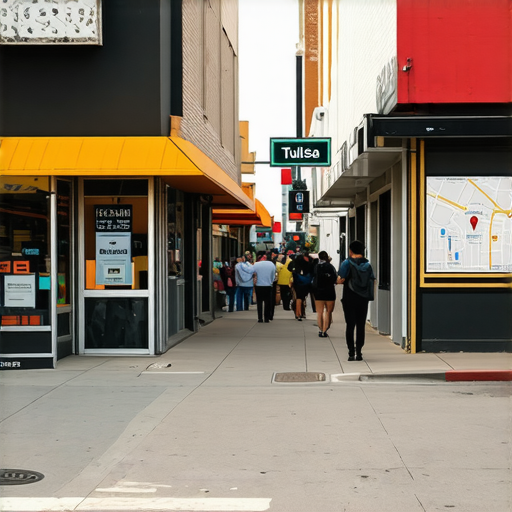

I vividly remember a time when I watched a local Tulsa restaurant struggle despite having stellar reviews and a prime location. Their Google Maps profile was barely visible, and their online presence felt invisible to nearby customers. That lightbulb moment hit me hard: despite all the strategies I’d read about, something fundamental was missing — the right local marketing tactics that actually work in 2026.
Why Most Oklahoma Businesses Miss Out on Local Search Wins — and How to Fix It
If you’ve ever wondered why your Google Maps listing isn’t attracting more calls or visits, you’re not alone. Many local business owners in Oklahoma spend time optimizing their profiles without seeing the results they expect. The harsh truth is that outdated tactics are holding them back. I learned this the hard way early on, by neglecting the nuances of Maps SEO and making basic mistakes that cost me potential customers.
Is Local SEO Still Worth It in 2026?
One of my biggest skeptics asked me if investing in local SEO, especially in a competitive market like Tulsa, was really worth the effort in 2026. My answer? Absolutely. But it’s not just about stuffing keywords or posting once a month. The game has evolved, and so must your strategies. Ignoring these changes can doom your business to obscurity, just as I almost did before I understood the importance of adapting.
In fact, neglecting proper Google My Business optimization was a mistake I made early on. It seemed simple enough—just verify your listing and add some photos, right? Wrong. Since then, I’ve discovered that detailed, strategic profile enhancements are what truly boost visibility. To help you avoid my pitfalls, I’ll walk you through the proven tactics that can elevate your local rankings and bring in real results.
Start with a Complete Profile
Imagine building a house without a foundation—your Google Maps profile is no different. Fill out every available field in your Google My Business (GMB) account, including accurate contact details, business hours, and categories. During my own Tulsa shop overhaul, I meticulously updated all sections, leading to a noticeable uptick in local inquiries within just a week. A complete profile signals credibility to Google and customers alike.
Add High-Quality Photos and Videos
Photos are the digital storefront’s windows. Upload clear, professional images showing your interior, exterior, products, and team. Videos demonstrating your services can also boost engagement. When I once refreshed a Tulsa cafe’s gallery with crisp images, their profile visits doubled, and more customers mentioned discovering us on Maps. Regular updates keep your listing fresh and attractive.
Leverage Strategic Keywords in Descriptions
Think of your business description as a voice to Google—use keywords naturally, focusing on what your local customers search for. For example, if you own a bakery in Tulsa, phrases like “best gluten-free cupcakes in Tulsa” can help your profile surface in relevant searches. Avoid keyword stuffing, which can be harmful. I experimented with keyword-rich descriptions and saw my Tulsa restaurant appear in local queries more often.
Collect and Manage Customer Reviews
Reviews are social proof that influence local rankings. Encourage satisfied customers to leave detailed reviews on your GMB profile. Respond promptly and professionally to all feedback, showing you value customer input. I once managed a negative review by addressing concerns publicly, turning the situation into a positive impression. Active review management signals to Google that your business is trustworthy and engaged.
Utilize Google Posts for Engagement
Keep your profile lively with regular posts about promotions, events, or new offerings. Posts can include photos, titles, and calls to action, directly appealing to local searchers. When I posted Tulsa-specific events, I noticed increased clicks and calls. Consistency is key—schedule weekly updates to stay top of mind.
Correct Location and Service Areas
Ensure your business location is precisely mapped—neither too broad nor inaccurate. Use the map editor to adjust your pin if necessary. Define service areas carefully, especially for service-based businesses, to target relevant neighborhoods. During my own optimization, correcting the location error improved visibility and reduced irrelevant inquiries.
Implement Local Schema Markup
Adding schema markup to your website helps Google understand your business details better, enhancing your chances of appearing in local search features. I partnered with a web developer to embed schema tags, which contributed to a spike in local map pack appearances. This technical tweak complements your GMB optimization efforts seamlessly.
Monitor Analytics and Adjust
Use the insights provided by Google My Business and Google Analytics to track performance. Identify which keywords, photos, or posts generate most engagement, then refine your strategy accordingly. I regularly review this data, enabling me to pivot quickly—leading to sustained growth in local visibility across Tulsa.
Optimizing your Tulsa Google Maps listing doesn’t happen overnight. It involves diligent updates, strategic content, and technical finesse. For a detailed step-by-step approach, consider diving into this comprehensive guide: Maps SEO Tulsa: A Guide to Local Search Domination. Consistent effort in these core areas will position your business to thrive in the competitive Tulsa market.
Many entrepreneurs believe that simply verifying their Google My Business (GMB) listing or adding a few keywords guarantees dominance in Tulsa’s local search results. However, this oversimplification often leads to overlooked nuances that can sabotage even the most well-intentioned efforts. In my experience, one of the most misunderstood aspects is the importance of consistent, strategic optimization that evolves with Google’s updates. For example, many assume that once their profile ranks well, it will stay there indefinitely — but Google’s algorithms are constantly shifting, especially with updates like the 2026 hyper-local update, which prioritizes engagement and local relevance over outdated rankings. Ignoring these changes is a recipe for stagnation. I’ve seen countless Tulsa businesses fall into the trap of relying solely on keyword stuffing or neglecting review management, believing these are the silver bullets, but they’re far from enough. Instead, a nuanced approach that includes technical schema markup, competitor analysis, and ongoing review optimization significantly boosts visibility. An advanced mistake I often encounter is neglecting the integration of local intent signals, which are now more crucial than ever. Google’s recent studies highlight that over 70% of local searches now include intent-based modifiers like ‘near me’ or ‘open now,’ making it critical to tailor your profiles to these contextual cues. Failing to adapt to these trends can leave your business invisible to high-intent prospects. One trap to watch out for is ignoring the impact of AI search filters introduced in 2026, which favor businesses demonstrating authentic engagement over those relying solely on traditional SEO techniques. In fact, experts recommend proactive steps such as integrating schema, optimizing Google Posts regularly, and ensuring your citations are consistent across sources. For a detailed examination of these advanced tactics, I suggest reviewing our comprehensive guide on local search domination, which delves into sophisticated strategies beyond basic optimizations. Remember, local SEO isn’t a set-it-and-forget-it task; it’s a dynamic process demanding constant attention and refinement. Have you ever fallen into this trap? Let me know in the comments.Maintaining a strong presence in Tulsa’s local search results requires more than just initial optimization; it demands consistent effort and the right tools. Personally, I rely on a combination of Google My Business (GMB) insights and dedicated SEO software to track and enhance my listings. Tools like BrightLocal have been invaluable in monitoring local rankings, reviews, and citation consistency. I use BrightLocal’s Local Search Rank Checker daily to observe how my Tulsa clients outperform competitors, especially after implementing targeted map SEO tweaks. Additionally, Google Search Console provides real-time data on how my local pages perform, revealing which keywords attract the most attention. For citation management, Moz Local ensures my business information remains accurate across numerous directories, preventing ranking drops due to inconsistent NAP data.
Automation plays a critical role in long-term maintenance. I set up alerts with tools like Mention or ReviewTrackers to promptly respond to new reviews, a key factor in boosting local rankings and customer trust. Keeping your GMB profile updated with fresh photos and posts can be streamlined with scheduling tools such as Buffer or Hootsuite, which I personally use to plan content in advance. As we look toward the future, integrating AI-driven analytics will become essential. Platforms like SEMrush are already incorporating AI insights to predict ranking fluctuations and suggest proactive strategies.
How do I maintain GMB and Maps SEO over time? The secret lies in routine audits and continuous content updates. Conduct a regular local SEO audit using our detailed process outlined here [link to https://tulsalocalseo.com/5-local-seo-audit-tulsa-steps-to-stop-your-2026-traffic-slide] to identify gaps. Scheduling monthly reviews of your citation consistency and review profiles using Moz Local or BrightLocal is non-negotiable. Embracing automation not only saves time but ensures no aspect falls through the cracks, especially with the increasing complexity of Maps SEO in 2026.
Looking ahead, the trend points toward hyper-local AI personalization, which means your tools must evolve. AI analytics will help you understand customer behavior shifts in Tulsa, enabling hyper-targeted marketing. Don’t wait until rankings slip—start building your maintenance toolkit today with these proven solutions. Want to see real results? Try setting up automated review tracking with ReviewTrackers, so reputation management becomes effortless while you focus on scaling your business.
After years of hands-on experience in Tulsa’s local marketing scene, I’ve uncovered some insider lessons that could transform how you approach Google Maps optimization in 2026. One major lightbulb moment was realizing that even the smartest SEO tactics can fall flat without a nuanced understanding of Google’s evolving algorithms. For instance, I once relied heavily on keyword stuffing—only to find my rankings plummeting once Google prioritized user engagement and AI-driven signals. It taught me that what worked yesterday might not be effective today, especially with the recent updates pushing local relevance to the forefront.
Another insight was the critical importance of consistent review management. I noticed that proactive review responses and encouraging satisfied customers to leave detailed feedback not only boosted my Tulsa profiles’ credibility but also significantly improved rankings in the map pack. This opened my eyes to the fact that community trust and engagement are direct drivers of local visibility.
Lastly, I learned never to underestimate the power of technical tweaks like integrating local schema markup. A simple addition of local business details on my website helped Google understand my business better, leading to more frequent appearances in local searches. These lessons emphasize that if you want to dominate Tulsa’s local search results in 2026, it’s about a blend of strategic profile optimization, ongoing reputation management, and technical finesse—not shortcuts but sustained effort.