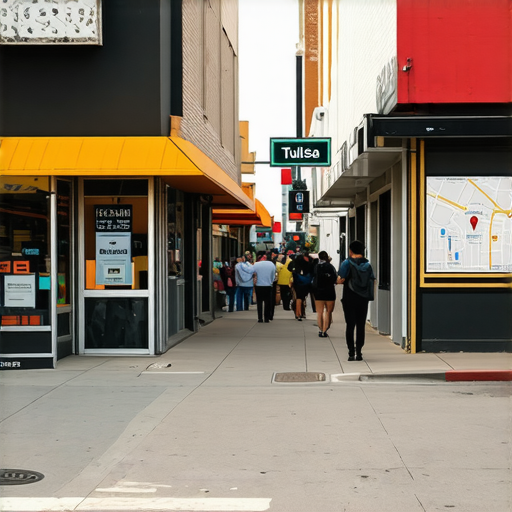
I remember the feeling vividly—standing in my shop, staring at my Google Maps listing, and realizing it hadn’t changed in months. No calls, no visits, just the cold silence of missed opportunities. It hit me then: I had been relying on outdated SEO tactics, hoping they’d somehow keep me afloat. That lightbulb moment made me realize that if I didn’t adapt, my business would be invisible in the 2026 local search landscape.
Why Staying Ahead of Local SEO Trends Is a Must in Oklahoma
In a place like Tulsa, where competition is fierce and digital visibility is king, small businesses can’t afford to fall behind. The local SEO game is evolving faster than ever, especially with the rise of AI-driven search and changes in Google Maps algorithms. If you’re still doing the same old SEO tricks from a few years ago, you’re already losing ground. Recent studies show that 76% of people who search for a local business visit within a day, making it critical to improve your online visibility now—before your competitors do.
How do I know? Because I’ve faced the frustration of seeing my business slip in the rankings despite my efforts, and I’ve learned that there are specific SEO moves that can turn things around. Today, I’ll share exactly how you can apply three proven strategies to win more local leads in 2026. But first, let’s tackle a common fear I hear all the time.
Is Local SEO Still Worth It in 2026?
I understand the skepticism. I used to believe that pouring money into Google Maps optimization was a gamble. Early on, I made the mistake of ignoring Google My Business (GMB) profile updates, thinking they didn’t make much difference. That was a costly oversight—and a mistake I see many small businesses repeating.
Google’s local search algorithms are more sophisticated now, incorporating reviews, proximity, and even voice search data. Ignoring these signals can leave your business invisible to nearby customers who are actively looking for your services. Don’t let this be your story. Instead, let’s explore how to leverage the latest local SEO moves that really work in 2026—moves that I’ve personally tested and refined.
Are you ready to take your Oklahoma small business to the top of local search results? Good—because the solutions I’ll share today can make a measurable difference in your lead generation and growth. To get started, let’s dive into the first big strategy: optimizing your Google My Business profile for maximum visibility.
Boost Your Google My Business Profile for Maximum Impact
Start by claiming and verifying your Google My Business (GMB) listing if you haven’t already. Ensure all information is accurate, complete, and consistent across platforms. Upload high-quality photos showing your shop’s interior and exterior—these visuals act like digital storefront windows, inviting local customers inside. Regularly update your business hours, services, and special offers to stay relevant. A well-maintained GMB profile signals to Google and local prospects that your business is active and trustworthy. This is the foundation upon which your local SEO efforts will thrive. For detailed tactics, check out GMB optimization in Tulsa and learn how to turn visitors into customers.
Emphasize Real Reviews that Drive Engagement
Encourage satisfied customers to leave authentic reviews on your GMB profile. Review signals influence your local search ranking and build social proof. Develop a simple process—perhaps a follow-up email or a QR code—making it easy for customers to review your business right away. Respond promptly and professionally to all reviews, whether positive or negative. A thoughtful reply demonstrates customer care and boosts your reputation. Remember, reviews are currency in local markets—like word-of-mouth but amplified online. To avoid common pitfalls, review Tulsa Google Maps rules for managing reviews effectively.
Optimize Your NAP for Consistency and Trust
Ensure your Name, Address, and Phone number (NAP) are consistent everywhere—your website, social media, directories, and offline materials. Discrepancies confuse Google and diminish your local authority. Think of NAP as your digital address—if it’s not accurate everywhere, customers and search engines can’t find you. Use structured data markup on your website to clearly communicate your business details to Google. This step bridges the gap between your physical storefront and the digital map—making you easier to find in Tulsa, regardless of how prospects search. For a comprehensive NAP audit, visit Tulsa NAP consistency tips.
Harness Local Keywords and Voice Search Optimization
Integrate hyper-local keywords naturally into your website content—think terms like “Tulsa restaurants near me” or “Oklahoma pet grooming Tulsa.” Use these in service descriptions, FAQs, and blog posts. Voice search is gaining ground; optimize for conversational queries like “Where’s the best coffee shop downtown Tulsa?” by adding long-tail keywords and question-based headers. This ensures your business appears when prospects ask their smart devices. Think of it as tuning your digital radio to the right frequency—they’ll find you when they ask for “the nearest” or “top-rated” options. For advanced tactics, explore Tulsa voice search strategies.
Leverage Local Listings and Citations Effectively
Beyond Google Maps, list your business on reputable local directories—Yelp, Bing Places, and industry-specific sites. Ensure your NAP and business details match exactly across all listings; inconsistency is your enemy here. Use citation-building tools to automate and monitor your presence, ensuring you’re not missing out on valuable mentions. These citations act as trust signals, prompting Google to recognize your authority in Tulsa’s local landscape. To outrank competitors, focus on niche-specific platforms as well—like local chambers or Tulsa-specific business associations. For guidance, see Local citation strategies.
Consistently Track and Tweak Your Performance
Use analytics tools like Google Insights and local SEO dashboards to monitor your rankings, reviews, and customer engagement. Regular audits help identify gaps—maybe your photos aren’t loading correctly or your keywords need refreshing. Think of this as your digital GPS; without tuning, you’ll drift off course. Make quarterly reviews a habit, and adapt your tactics based on data. This continuous improvement approach ensures you stay competitive, especially as Google updates algorithms and local search behaviors evolve. For practical audit steps, refer to Tulsa SEO audit checklist.
Many local business owners believe that optimizing their Google Maps listing with basic information and keywords is enough to dominate Tulsa’s competitive market, but this misconception can hurt more than help. In my experience, the most common mistake is relying solely on surface-level tactics like keyword stuffing or quick GMB hacks, instead of focusing on building genuine relevance through nuanced strategies. For instance, optimizing your Google My Business profile without aligning it with your broader local marketing efforts, like those outlined in Oklahoma’s local marketing blueprints, often leads to short-lived gains rather than sustainable growth.
A critical nuance many overlook is the importance of signals beyond reviews and NAP consistency. Advanced local SEO in Tulsa requires paying attention to user intent signals, engagement metrics, and authoritative citations that act as trust indicators to Google. This is where many get it wrong: they focus on quick fixes instead of establishing a well-rounded authority, which is essential in the era of AI and personalized search. As Map SEO Tulsa guide emphasizes, your visibility depends on a complex web of signals that need continuous nurturing.
One trap to avoid is the misconception that maps ranking is purely about technical tweaks or reviews—it’s about relevance, authority, and experience. Loading your profile with irrelevant tags or fake reviews may give a short-term boost but will harm your credibility and ranking in the long run. Google’s algorithms are smarter than ever, incorporating machine learning that detects unnatural patterns — which is why authentic engagement and meaningful content matter. A simple example: optimizing your profiles with real-world data and local keywords, such as “Tulsa’s best pet groomer,” tailored to user intent, rather than generic terms, can vastly improve your chances of reaching top results.
This nuance is supported by studies indicating that authoritative citations and contextual relevance significantly influence local rankings (see Tulsa Local SEO Secrets). The goal is to craft a holistic strategy that integrates map optimization with comprehensive local marketing efforts, rather than relying on isolated hacks.
Here’s a thought: Are you still investing in quick fixes that won’t stand the test of time? Or are you building a real local presence that Google recognizes and customers trust? If your strategy remains superficial, you risk losing traffic to competitors who understand the subtle art of local relevance and authority. Remember, the internet rewards those who combine technical finesse with genuine relevance—so stay ahead by mastering both.
Have you ever fallen into this trap? Let me know in the comments! And if you want to dive deeper into mastering Tulsa’s local search landscape, check out Hidden GMB Hacks for 2026 and beyond.
How do I maintain long-term success with Maps SEO in Tulsa
Once you’ve established a solid foundation for your Tulsa local SEO, maintaining it requires the right tools and regular check-ins. I personally recommend investing in Google Business Profile Manager—a tool I use daily to monitor reviews, update business info seamlessly, and analyze performance metrics. Its intuitive dashboard allows for quick edits and real-time insights, which are crucial in a dynamic market like Tulsa where Google’s algorithms evolve rapidly.
Another essential asset is BrightLocal’s Local Search Rank Checker. I rely on it to track my rankings for key local keywords over time. It helps me understand if my optimizations are sticking or if adjustments are needed—saving me time and preventing lost visibility. Regular rank tracking with such tools ensures you stay aligned with the latest trends, enabling proactive improvements instead of reactive fixes.
For ongoing citation management, Whitespark’s Citation Building & Monitoring software is invaluable. It keeps my NAP consistent across numerous directories and alerts me to any discrepancies that can harm my rankings. Consistency builds trust with Google and local customers alike.
Looking ahead, I see the trend moving toward more automation and integration. Advanced AI tools will soon offer predictive insights based on your local market data, allowing businesses to anticipate Google Map updates and user behavior changes. Investing now in automation tools that can adapt and learn—like Moz Local’s monitoring suite—is a smart move to stay ahead in Tulsa’s competitive scene.
What questions should I ask to stay on top securely?
Ensure you have a process for regular audits, such as the one outlined in this quick local SEO audit. Confirm your NAP consistency, review your performance metrics, and check that your Google My Business profile remains optimized. Setting reminders for quarterly reviews is a practical way to keep your SEO efforts in check.
Next, incorporate tools like Google Alerts customized for Tulsa keywords to stay informed on local trends affecting your business. Lastly, embracing automation can reduce manual errors and extend your reach—get familiar with tools like SEMrush’s position tracking and Moz’s integration features to streamline your efforts.
To put these into practice today, try scheduling your next audit with the suggested tools, and set automated tracking for your main keywords. Staying vigilant with your tools ensures your Tulsa business remains visible and competitive. Want to explore more advanced strategies? Visit Tulsa Voice Search Strategies for cutting-edge insights.

3 Hard-Learned Truths About Tulsa Map Rankings That Changed My Game
- Consistency Over Hacks: I used to chase quick wins with shortcuts, but I realized that sustained success depends on steady, consistent effort—like maintaining NAP accuracy and nurturing reviews daily. Cutting corners only leads to fleeting results.
- Think Like Your Customer: Understanding local customer intent transformed my strategies. I started optimizing for what Tulsa residents genuinely search for, not just generic keywords, which opened up new avenues for engagement.
- Embrace the Data: Regular audits and analytics revealed patterns I would have missed otherwise. Using tools for tracking rankings and performance helped me pivot before losing ground, saving time and resources.
- Build Authority Carefully: Authentic citations and meaningful community engagement became my secret sauce. Instead of superficial links, I focused on creating a trustworthy profile that Google could recognize and reward.
- Stay Adaptable in a Rapidly Changing Landscape: Google’s algorithms constantly evolve, especially in Tulsa’s competitive market. Staying informed through credible sources like Tulsa Local SEO Secrets meant my strategy was always a step ahead.
Gear Up with the Tools That Keep Me Ahead
- Google Business Profile Manager: The backbone of my local SEO efforts, it streamlines updates and monitors reviews effectively.
- BrightLocal’s Rank Checker: Critical for assessing whether my keywords are holding their position or need a refresh.
- Whitespark’s Citation Software: Ensures my NAP consistency across countless directories, building trust with Google and customers alike.
- Google Alerts for Tulsa: Keeps me in the loop with local trends and competitor moves, allowing me to adjust on the fly.
Your Next Move in Tulsa Local Marketing Starts Today
Remember, the key to dominating Google Maps in Tulsa isn’t just about fixing technical errors; it’s about cultivating a genuine presence that resonates with the community and search engines alike. With consistent effort, strategic tools, and a mindset attentive to change, you can carve out a prominent spot in the 2026 local search landscape. The future belongs to those willing to learn and adapt—so get started now, and watch your business thrive.
What’s the one local SEO challenge you’re struggling to overcome right now? Drop your thoughts below and let’s grow together!