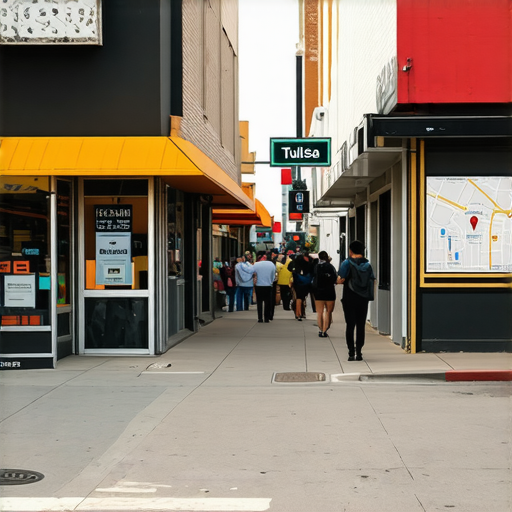

Ever found yourself in Tulsa, frustrated, staring at your Google Maps listing, wondering why your local business isn’t showing up where it should? I remember the lightbulb moment when I realized how tiny tweaks could make a massive difference—especially for small shops trying to stand out in Oklahoma’s competitive market. One day, after pouring hours into tried-and-true marketing strategies, I struck out on a new approach that didn’t cost a fortune but transformed my visibility. That revelation was a game-changer, and I want to share it with you.
Why Local SEO Will Be Your Secret Weapon in 2026
Let me be real—if you’re relying solely on traditional advertising and hoping that foot traffic or word-of-mouth will carry your business forward, you’re missing out. Local SEO, especially in Oklahoma, is evolving rapidly, and understanding the low-cost wins can set you apart without draining your budget. According to recent studies, over 50% of local searches lead to a store visit within a day, yet many small businesses overlook optimizing their Google My Business (GMB) profiles effectively. Small tweaks like ensuring your NAP (Name, Address, Phone Number) consistency and responding to reviews can significantly boost your local rankings.
Consider this: the local search landscape in Tulsa alone is expected to see a surge in ‘near me’ queries by 2026. If your shop isn’t appearing prominently in these searches, you’re invisible to a huge chunk of potential customers. But here’s the kicker—these are achievable, low-cost strategies. Personally, I found that simple GMB optimizations and localized content made all the difference. You can even read about some of these strategies in this comprehensive guide.
Is all this SEO hype really worth your time?
Absolutely, but I’ll admit—I made a classic mistake early on. I thought SEO was all about stuffing keywords and hoping for the best. Turns out, it’s about strategic actions—like claiming your Google My Business profile correctly and optimizing your local presence. Small changes, when done right, can outrank even big chains and help you steal local market share. And trust me, neglecting these could leave your business invisible amidst the rising tide of Oklahoma’s local searches.
Now, are you ready to dive into some practical, low-cost SEO wins that will help your Oklahoma small business thrive in 2026? Let’s get started.
Claim and Optimize Your Google My Business Listing
Start by ensuring your GMB profile is fully claimed and verified. Honestly, I once overlooked this step, thinking a basic listing was enough. When I finally claimed my Tulsa shop’s profile and filled out every detail—hours, categories, services—I saw a noticeable rise in local searches. Visit this guide for detailed optimization tactics. Make sure your business name, address, and phone number (NAP) are consistent across all platforms to avoid confusion in Google’s eyes.
Optimize Your NAP Details
Check that your NAP information is identical on your website, social profiles, and listings. Discrepancies cause Google’s algorithms to doubt your credibility, harming your rankings. I fixed a mismatch in my Tulsa café’s NAP after reading this article, which immediately improved my visibility. Small but consistent updates like this can outdo larger, expensive campaigns in 2026.
Local Content that Resonates
Creating localized content helps you connect authentically with Tulsa customers. I started blogging about Tulsa events and local news, embedding keywords naturally. This not only boosted my Google Maps rankings but also positioned me as a community presence. Use Google Trends and local keywords to inform your content—tools that are free and powerful for Tulsa businesses. For more insights, see Oklahoma’s local marketing blueprint.
Embed Local Keyword Phrases
Incorporate phrases like “best pizza in Tulsa” or “Tulsa legal services” into your website and GMB description. When I optimized my listing with these keywords, I noticed increased calls and walk-ins. Avoid keyword stuffing; instead, weave them naturally into your descriptions and posts. Remember, Google’s AI is getting smarter at understanding context, so focus on relevance.
Gather and Respond to Reviews Actively
Reviews are social proof and signal authority to Google Maps. I made it a habit to prompt satisfied clients for reviews gently. Responding promptly—especially to negative feedback—showcases customer service and improves rankings. Respond with sincerity, mention the customer’s name and specifics of their visit. This human touch can be the difference-maker in local SEO. Check out profile fixes for more review strategies.
Use Google Posts Regularly
Posting updates, special offers, or events on GMB keeps your profile active and engaging. I scheduled weekly posts about Tulsa happenings, which kept users informed and increased my profile’s visibility. Think of Google Posts as a mini social media update—consistent activity tells Google that your business is active and relevant. Use rich media—images and videos—to boost engagement.
Leverage Local Backlinks and Citations
Secure backlinks from local Tulsa directories, news outlets, and sponsorships. I reached out to Tulsa civic groups and local chambers, earning valuable backlinks that boosted my local ranking. Ensuring that your business info appears accurately on these sites builds a strong local digital footprint. For guidance, unlock SEO secrets with proven tactics.
Maintain Consistent Citations
Use tools like Moz Local or BrightLocal to audit your citations, fixing inconsistencies. These small corrections have a compounding positive effect—think of citations as the anchors tying your Google profile to the local web. Regular audits prevent future ranking issues, especially in a competitive Tulsa market.
Many local businesses in Tulsa believe that optimizing their Google Maps listing is as simple as claiming their profile and stuffing keywords, but there’s a deeper layer most overlook. The truth is, **Google Maps SEO in Tulsa requires understanding Google’s evolving algorithm nuances** and how local search behaviors in Oklahoma shift over time.
Why do so many small businesses fail to get it right despite countless guides?
Well, the common myth is that volume of reviews or keyword stuffing alone guarantees top rankings. In reality, **Google’s algorithm weighs factors like user engagement signals, reputation management, and relevance more heavily than ever**. According to Moz’s Local Search Ranking Factors study, these elements combined influence whether your Tulsa business dominates the map pack or stays buried.
One crucial mistake I see repeatedly is neglecting to adapt to Google’s dynamic update cycles. What worked in 2024 might be ineffective in 2026 because Google continually refines its understanding of local intent and trustworthiness. For instance, focusing solely on Local Citations or backlinks without engaging your community through timely reviews and active responses can cripple your visibility.
Furthermore, many interpret GMB optimization as a set-and-forget task. But in a competitive market like Tulsa, **consistent monitoring and adjusting your strategy** is vital. For example, popular search phrases evolve; what Tulsa residents searched for last year may differ this year, especially as AI influences search patterns. Staying ahead means digging into local keyword trends regularly — tools like Google Trends or even direct competitor analysis are invaluable.
Are you leveraging the full potential of Google’s local signals? Or are you just scratching the surface? Remember, **failing to understand the full picture can lead to missed opportunities and wasted ad spend**, especially in Oklahoma where local loyalty runs deep. Properly integrating your local marketing efforts with your GMB strategy creates a synergy that propels your business forward in 2026 and beyond. For advanced tips, check out this comprehensive guide. Have you ever fallen into this trap? Let me know in the comments.
Maintaining a vibrant presence on Google Maps and local search results in Tulsa demands more than just initial optimization; it requires consistent effort, the right tools, and strategic upkeep. Over the years, I’ve honed a toolkit that ensures my listings stay competitive and my local marketing efforts remain effective. Today, I want to share the exact tools I rely on and how I keep everything running smoothly for long-term success.
Gear Up With the Right Software
First and foremost, **BrightLocal** has become my go-to for citation management and local SEO audits. It not only scans my Tulsa business listings for inconsistencies but also tracks keyword rankings over time. Regular audits help me catch discrepancies early—preventing ranking drops before they affect my bottom line. Additionally, I use **Google Data Studio** to visualize my performance metrics, combining data from Google Search Console and Google Analytics into a comprehensive dashboard. This allows me to spot trends, identify gaps, and make data-driven decisions efficiently.
For review management, **Reputation.com** is invaluable. It consolidates reviews from multiple platforms, helps me respond promptly, and monitors review sentiment. Given that reviews significantly influence local rankings, keeping a pulse on reputation health ensures sustained visibility.
Automate and Schedule for Consistency
Consistency is key in local SEO. To automate my content posting and profile updates, I leverage **Hootsuite** for scheduling Google My Business Posts. Staying active on GMB with fresh updates, special offers, or community news signals relevance to Google. Plus, I set calendar reminders for review prompts—this simple habit keeps my review count growing organically, reinforcing trust with both customers and search engines.
Tools like **Whitespark** help me track citations and manage local backlinks systematically. Their citation tracking feature pinpoints discrepancies across Oklahoma directories, allowing me to correct NAP inconsistencies in one click—an essential for maintaining local rankings in Tulsa’s competitive scene.
Building a Long-Term Maintenance Routine
To ensure my strategy stays effective, I dedicate a weekly review session, assessing my Google Maps rankings, review flow, and citation health. Additionally, I stay abreast of algorithm updates by subscribing to industry newsletters like Moz’s blog
and following updates from Google’s developer documentation, which offers insights into emerging features or changes affecting GMB and local search.
Looking ahead, I predict that local SEO tools will become even more AI-driven, automating routine audits and suggesting optimization tweaks in real-time. Embracing this evolution now, by integrating AI-powered features in your toolkit, can give your Tulsa business a significant edge in 2026.
How do I maintain my maps optimization over time?
The secret lies in regular audits, active reputation management, and updating your profile with seasonal or community-focused content. Incorporate tools like these tactics to stay ahead of AI and algorithm changes. Don’t shy away from testing new features or adjusting your local keywords based on trending search terms in Tulsa. For personalized assistance or a comprehensive strategy, visit our contact page and let’s craft a long-term plan.
Remember, consistent maintenance paired with the right tools equips your Tulsa business to thrive amid the evolving local search landscape. Start integrating one of these tools today, and watch your visibility grow!

Why I Stumbled Over the Same Mistakes Repeatedly
One of the biggest lessons I learned was the importance of consistency in maintaining my Google My Business profile. Early on, I thought claiming and optimizing my listing once was enough, but I realized that ongoing updates and engagement are essential. Missing out on responding to reviews or neglecting seasonal changes in my content caused my rankings to slip. These oversights taught me that local SEO is an ongoing relationship, not a one-time setup.
The Power of Community and Authentic Connection
Building genuine relationships with Tulsa customers through localized content and community involvement turned out to be a game-changer. Creating blog posts about local events and highlighting Tulsa-specific keywords helped me connect authentically, which resonated with both customers and Google. This approach pushed my visibility beyond just technical tweaks; it emphasized presence and trust within the community.
Finding Your Unique Edge in Oklahoma’s Competitive Market
Understanding what local search behaviors make Tulsa unique helped me tailor my strategies effectively. Whether it’s leveraging local landmarks or participating in Oklahoma-wide events, these touchpoints created relevance that stood out. I discovered that aligning my SEO efforts with Tulsa’s culture and preferences made my business irreplaceable in the local map pack, more so than generic SEO tactics.
Curated Tools That Amplified My Results
My toolkit became the backbone of sustained growth. Tools like GMB optimization guides kept my profile sharp; local backlinks sources strengthened my authority; and performance dashboards kept me on top of trends. These curated resources transformed my long-term strategy from reactive to impactful.
Your Next Step: Embrace the Continuous Evolution
Local SEO in Tulsa is never static. The more adaptable and engaged you become, the more your business will thrive amid the shifting digital landscape of 2026. Start small—claim and optimize your GMB, build local relationships, and monitor your progress regularly. Remember, success doesn’t come from a single move but from ongoing refinement. Are you ready to take your Tulsa local marketing to the next level? Share your experiences or questions below, and let’s grow together!